
Contemporary art publications about Museo Reina Sofía
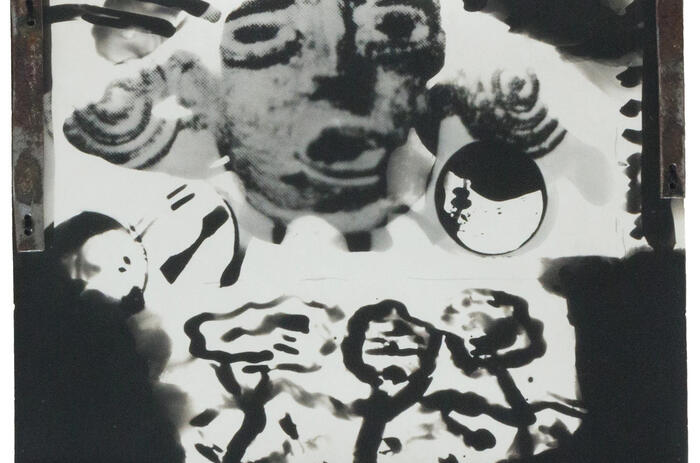
MINUJÍN, FERNANDA LAGUNA AND MIGUEL ÁNGEL ROJAS, PROTAGONISTS AT THE REINA SOFÍA
The institution is reinforcing its commitment to Latin American art with three exhibitions that, like the thematic lines underpinning this season, will explore the body, memory, and participation.
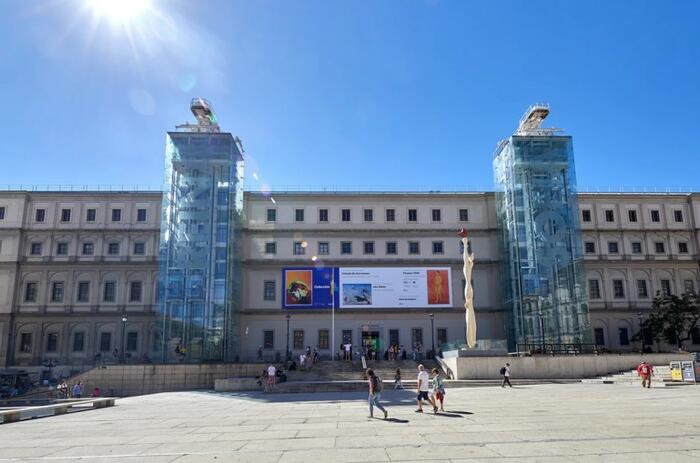
LAST DAYS TO APPLY FOR ICAC GRANTS AT THE MUSEO REINA SOFÍA
The Instituto Cáder de Arte Centroamericano has two open calls for researchers and students from the region: one closes June 21 and the other June 30, 2026.
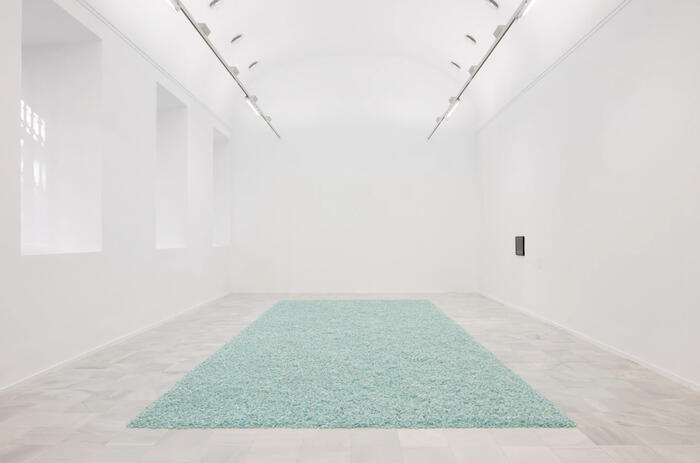
GONZALEZ-TORRES’ SWEET REVENGE IN MADRID UNRAVELS THE CURATORIAL NARRATIVE
The Museo Reina Sofía presents a selection of more than fifty participatory, reconfigurable and conceptually driven works by Felix Gonzalez-Torres, activating a contemporary reading of his practice that exceeds both curatorial boundaries and established discursive frameworks.
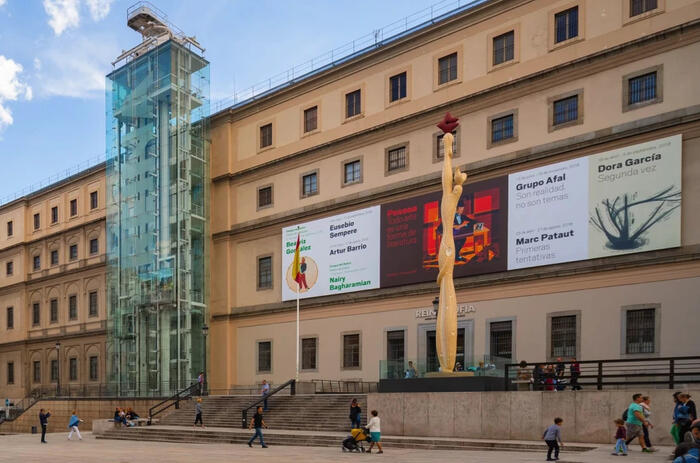
REINA SOFÍA LAUNCHES OPEN CALL FOR HEAD OF EXHIBITIONS
The museum is seeking a professional to lead the planning and coordination of its exhibition program, with applications open until May 5.
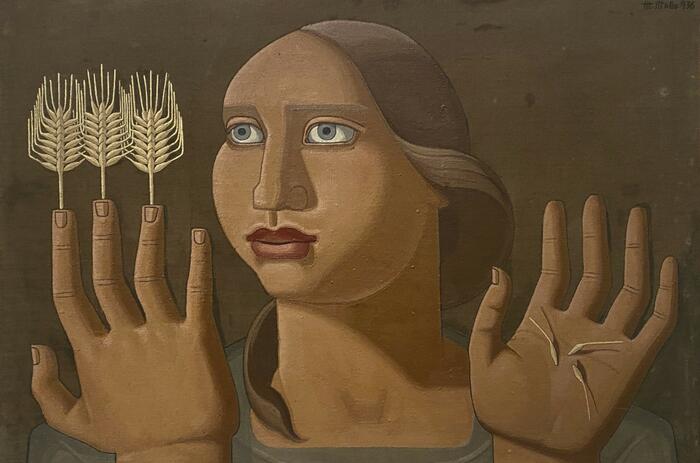
THE REINA SOFÍA STRENGTHENS THE FIGURE OF MARUJA MALLO
Máscara y compás underscores the importance of Maruja Mallo’s Latin American exile as a key stage in her artistic renewal, during which her avant-garde language expanded through the integration of the cultural and symbolic realities of Latin America.
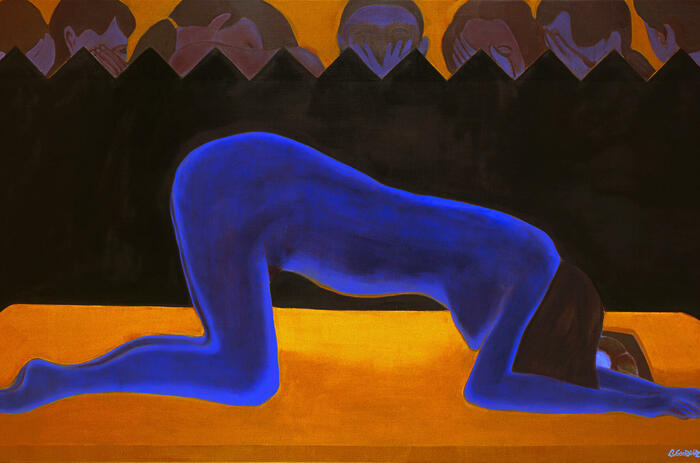
EIGHT KEY LATIN AMERICAN ART EXHIBITIONS TO SEE ACROSS EUROPE IN 2026
From historical retrospectives to immersive installations and new commissions, museums across the continent will host the work of seminal artists.
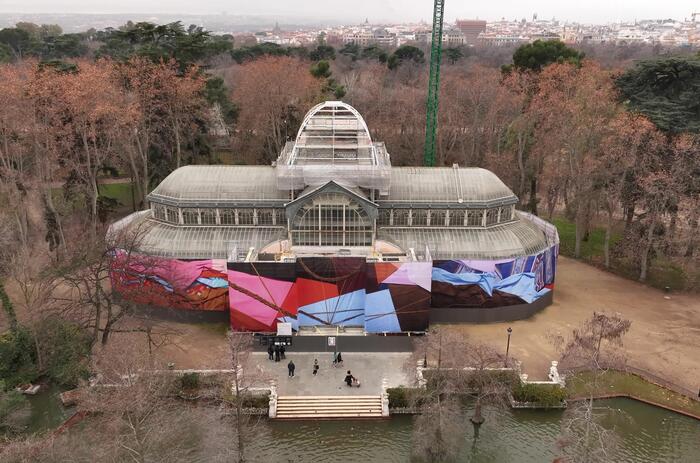
ANDREA CANEPA: THE PALACIO DE CRISTAL AS A SYMBOLIC BODY
Andrea Canepa intervenes in the Palacio de Cristal at the Museo Reina Sofía with Fardo, an installation consisting of a large tarp inspired by pre-Columbian funerary bundles that transforms the building into a symbolic body, inviting reflection on what is visible and displayed, as well as on preservation and transformation.

LATIN AMERICA EMPHASIZES ITS CRITICAL PRESENCE AT THE REINA SOFÍA
The presentation of the current season at Madrid’s Reina Sofía Museum has underscored the strategic importance of Latin America and its artistic practices in the vision of Spain’s largest public contemporary art institution. This is not something new, since its commitment as a public museum has incorporated the Ibero-American narrative as an essential part of its historical account from the beginning. However, what does stand out is the accentuation of its critical essence in a program —the first fully developed under the direction of Manuel Segade, with the exception of a single exhibition— which introduces new elements.
MEMORY, PHANTASY AND RESISTANCE IN NAUFUS RAMÍREZ-FIGUEROA
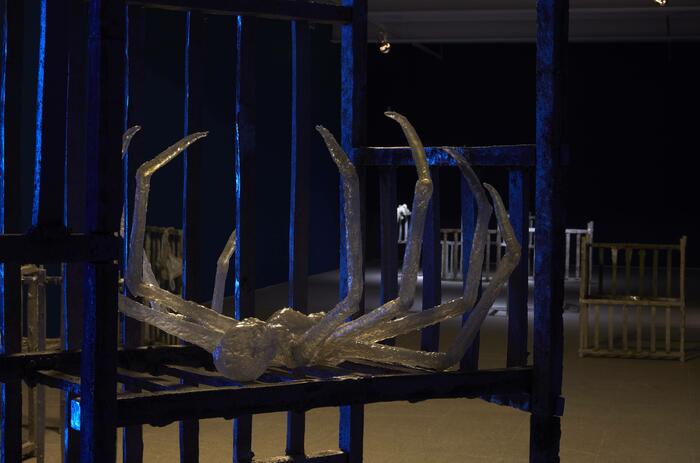
Naufus Ramírez-Figueroa (Guatemala City, Guatemala, 1978) has long warranted a mid-career exhibition such as the one hosted by the Museo Reina Sofía. His ongoing activity and presence in institutions and performances over recent years have positioned the Guatemalan artist as a key figure in the development and visibility of contemporary Central American art beyond its geographic framework.
BIENALSUR CURATES LATIN AMERICAN VIDEO EXHIBITION AT THE REINA SOFÍA
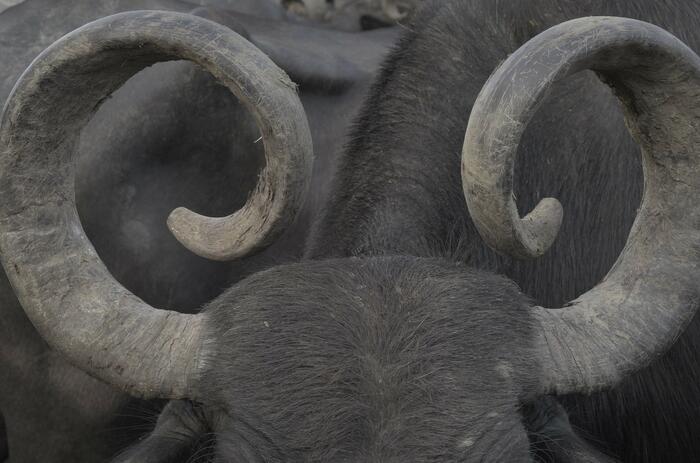
The Reina Sofía Museum, in collaboration with BIENALSUR, presents the exhibition Resistencia. Una selección de video sudamericano (Resistance: A Selection of South American Video). Curated by Argentine art historian Diana Wechsler, artistic director of BIENALSUR, the exhibition offers two complementary ways to engage with the works, both situated around the museum’s cinema hall.
INTERVIEW WITH MANUEL SEGADE
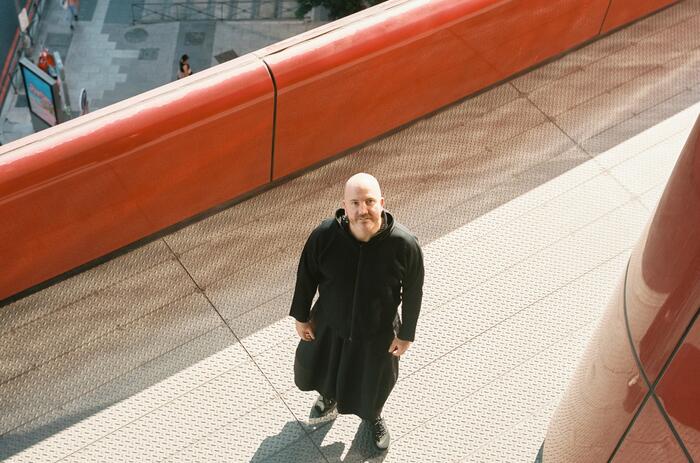
Manuel Segade (La Coruña, Spain, 1977) celebrates two years this month at the helm of Spain’s largest public museum of contemporary art. Since taking over as director of the Reina Sofía, he has implemented a series of exhibition and institutional strategies that have gradually shaped the museum’s strong personality and clear direction. In addition to progress on gender and feminist issues, decolonial thinking plays an important role in his vision—always from a perspective that necessarily looks to both sides of the Atlantic. Segade never seems to lose his enthusiasm, as evidenced by his expression and way of speaking. He welcomes us into his office at the Reina Sofía to finalize ideas and details, and to discuss the museum’s positioning and approach regarding Latin America.

INTERVIEW WITH JULIA MORANDEIRA
Julia Morandeira Arrizabalaga (Bilbao, Spain, 1986) is in her first year at the Reina Sofía Museum as Director of Studies, a position she has held since October 2024 and which, since March of this year, she has combined with the directorship of the Instituto Cáder de Arte Centroamericano (ICAC). This organization faces several challenges in its core missions of raising awareness and promoting, but above all, researching and disseminating the reality of contemporary Central American art. It has ten years ahead of it to do so, and the foundations are already being laid to ensure that its objectives are met. Morandeira welcomes us to her office at the Reina Sofía, a few floors above the building that houses the library and which marks its character and connection with divulgation, to talk about the project, her vision, and the progress and future that are already taking shape.
A GAZE INTO SALVADORAN AUDIOVISUAL ART AT THE REINA SOFÍA
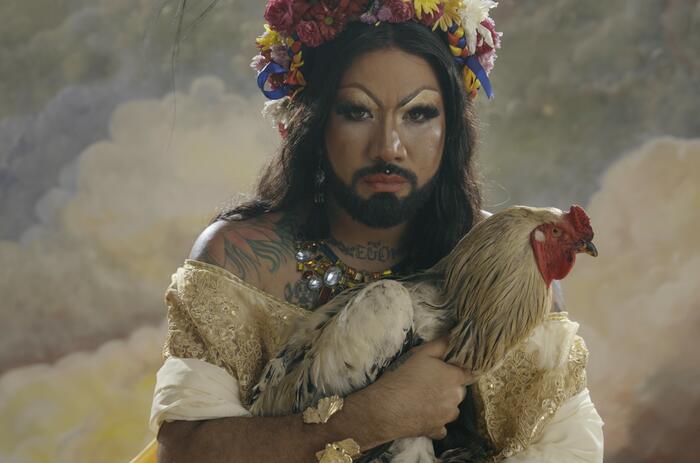
From June 19 to 28, Madrid’s Reina Sofía Museum will host Los reyes de la página roja (The Kings of the Red Page), a program dedicated to contemporary audiovisual productions from El Salvador. Part of the series Other Visions of Central America, this selection has been curated by Salvadoran artist Patricio Majano, this year’s resident at the Instituto Cáder de Arte Centroamericano—an initiative promoted by the Reina Sofía Museum Foundation and the museum itself to support research and dissemination of Central American art.
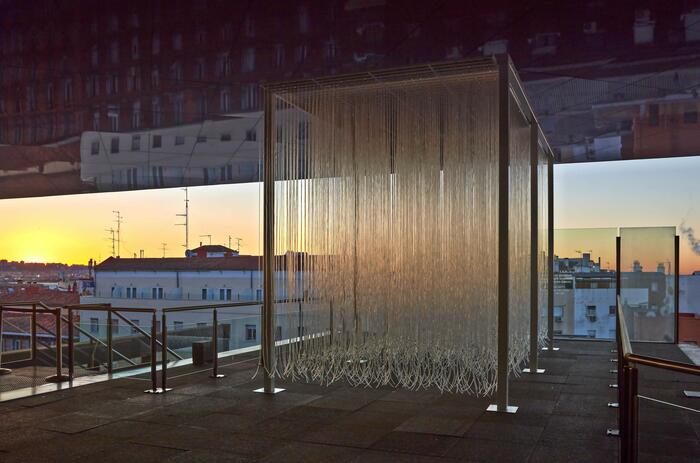
SOTO, NEGRET AND CHIRINO LEAD THE REOPENING OF THE REINA SOFÍA TERRACES AS AN EXHIBITION SPACE
The terraces of the Nouvel Building at the Reina Sofía Museum are being transformed into a new exhibition space. Under the title A Different Order: Utopian Geometry and Kinetic Art, the space will showcase two sculptural works by Jesús Rafael Soto and Edgar Negret, along with a third piece by Martín Chirino.
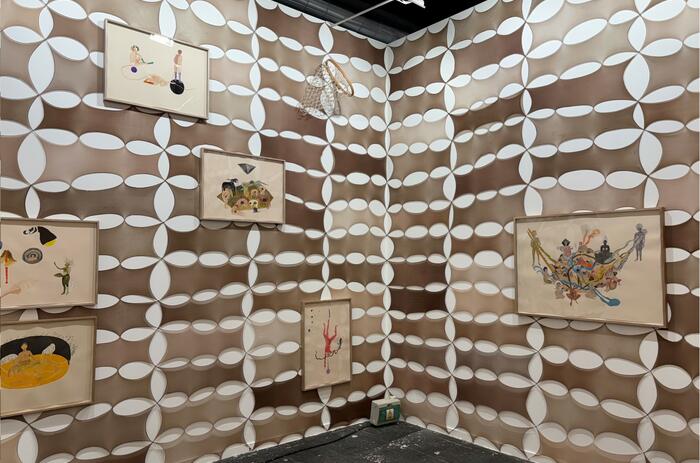
THE REINA SOFÍA ACQUIRES WORKS BY MINUJÍN, LIZARAZO AND ECHEVERRI AT ARCO FOR ITS COLLECTION
The Museo Nacional Centro de Arte Reina Sofía has announced the acquisitions made during the ARCO fair, through which both the institution and the Ministry of Culture expand the museum’s collections. Among the artists whose work is now part of the Madrid-based institution are Argentine artist Marta Minujín and Colombian artists Juan Pablo Echeverri and Luz Lizarazo—three figures with different career trajectories who bring a distinct Latin American perspective to a list of acquisitions largely focused on Spanish artists.